
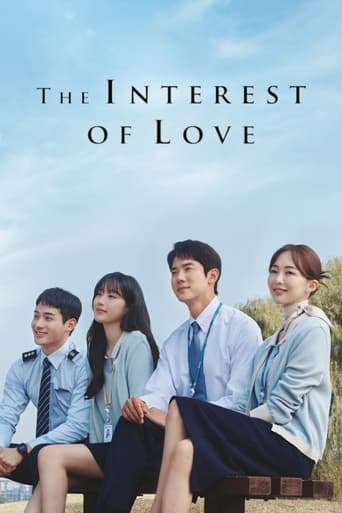
 ★ 6.1The Interest of Love2022
Dramahood
136 dramas and 38 films from Korea, 1994 to 2026, with 6,504 episodes listed.
In the spotlight
 ★ 6.2
★ 6.2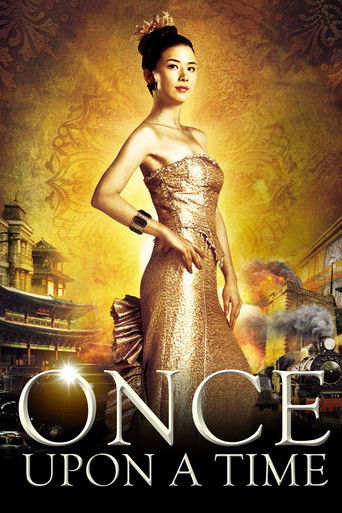 ★ 6.0
★ 6.0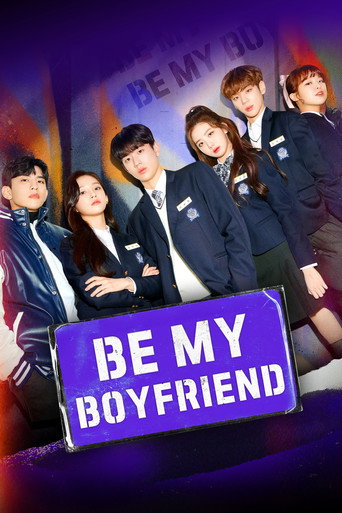 ★ 6.3
★ 6.3 ★ 6.1
★ 6.1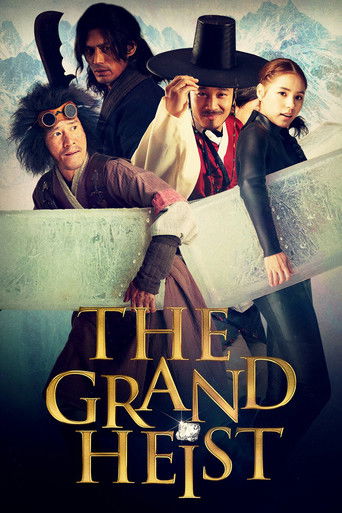 ★ 6.4
★ 6.4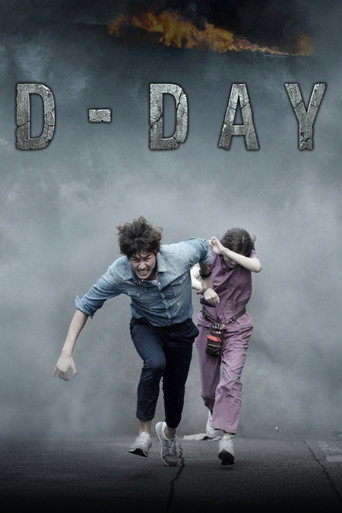 ★ 5.7
★ 5.7Recently added
See all (174)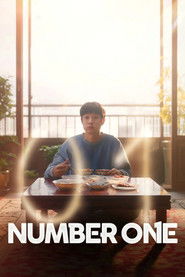
Number One
Eighteen-year-old Ha-min suddenly begins to see the number "365" every time he eats his mother's homemade meal—and the number drops with each bite. Believing it to be a countdown to his mother's death, he distances himself from…

Recipe For Love
Two families entangled in a bad relationship for 30 years, resolving misunderstandings, healing each other's wounds, and ultimately being reborn as one family.
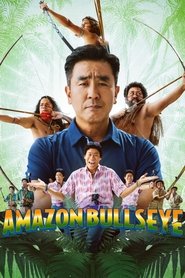
Amazon Bullseye
Once an Olympic medalist in archery but now the top target for restructuring, Jin-bong heads to the Amazon to seize one last chance offered by his company. After barely surviving a life-threatening ordeal, Jin-bong arrives in the…

Firefighters
Even in the harshest environments, firefighters must focus on extinguishing fires and rescuing everyone there. At 3:47 AM on March 4, 2001, the 119 emergency call center receives a phone call about a fire that has broken out in…
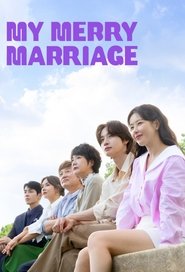
My Merry Marriage
A delightful family drama that asks the true meaning of 'happiness' by showing various aspects of marriage such as divorce, remarriage, and single life, and brings about empathy and laughter from all generations. Maeng Gong Hee…

Su Ji and U Ri
A healing romance begins between fallen star doctor Jin Su Ji and stubborn newbie doctor Choi U Ri.
Popular dramas
See all (136)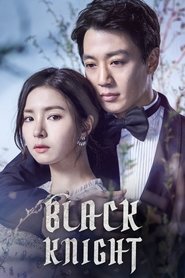
Black Knight
A successful executive determined to do whatever it takes to protect the woman he loves, meets a travel agent, who may be linked to his past.

My Lawyer, Mr. Jo
Jo Deul-Ho, who came from a poor family background, is a promising prosecutor, but he can't ignore the corruption at his workplace. He becomes a whistle-blower and loses everything. Jo Deul-Ho then works to become a lawyer.
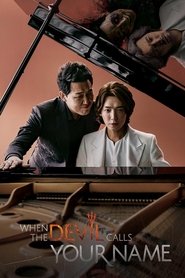
When the Devil Calls Your Name
Music producer and composer Ha Rib made a contract with the devil to trade his soul for fame. This devilish transaction brought him all the fame he could ask for, producing many hit songs. As the contract expiration draws near,…

A Poem A Day
Story follows a group of physical therapists, nurses, radiological technologists and trainees. Ye Jae-Wook works as a physical therapist and also teaches in the same field. He begins to work as a team leader at a hospital. Woo…

My Lovely Girl
A man is tormented by the death of his girlfriend in an accident that occurred before his eyes, he decides to secretly help her sister fulfill her dream of becoming a songwriter.

Ms. Temper & Nam Jung Gi
Ok Da-Jung is the youngest team leader in the cosmetics industry. She has divorced three times so far. She doesn't care what others think about her and she also has quite a temper. Nam Jung-Gi works as a section chief at the same…
Popular films
See all (38)
Enemies In-Law
Chul-soo is the only son of a legendary thief family. He falls in love with Young-hee who is a police officer. Her family is also a police family. To get her parents’ permission to marry, Chul-soo undertakes an exam to become a…

Love Fiction
A writer looking for inspiration finds a perfect muse in a girl. After much work, he makes her his girlfriend. But then he starts to get tired of her.

Fashion King
A teenaged boy transforms from a 'fashion terrorist' to a 'fashion king' in order to win the heart of the prettiest girl in school. The story is about high school boy Ki-myung, who has a crush on the prettiest girl in his class…
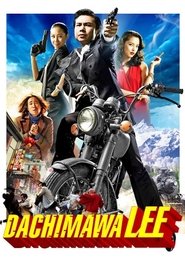
Dachimawa Lee
Under Japanese imperialism, Korean national treasure Golden Buddha is stolen. More important to national security, the statue contains vital information concerning Korean freedom fighters and their whereabouts as well as their…
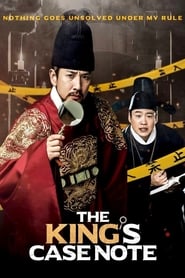
The King's Case Note
A clever king of Joseon and his brilliant chronicler hunt for the truth behind a crime that threatens the throne and the stability of the country.
The Dramahood guide to Korean dramas and films
Dramahood: Korean dramas and films, with The Interest of Love, Black Knight, When the Devil Calls Your Name, Big Thing, My Husband Got a Family, The Grand Heist and Best Friend
Korean television and Korean cinema grew up side by side, sharing actors, writers and a taste for stories that mix laughter with tears. A viewer who enjoys one usually enjoys the other, and the same faces turn up in both: the leading man of a Monday drama is the comic hero of a holiday film, and the grandmother of a weekend serial once won prizes at festivals abroad. Dramahood is a guide to 136 Korean dramas and 38 Korean films made between 1994 and 2026. It gives each a page with its cast, its episodes where it has them, and a Watch now button that leads to the official services carrying it.
The 136 dramas have 6,504 episodes between them. Eighty-four are miniseries of thirteen to twenty-four episodes, eighteen are mid-length dramas of twenty-five to forty-nine, and thirty-four are long serials and sitcoms of fifty or more. The thirty-eight films range from a tender romance of 1999 to a family drama of 2026. This guide takes the dramas first, by length and kind, then the films, then looks across both at professions, youth and period pieces, and closes with the search, My List and a plan for a first fortnight.
What Dramahood is
Dramahood is a viewing guide. Each of its 174 pages describes one title: its story, the year in which it was made, its leading actors, its director where one is recorded and, for a drama, the order of its seasons and episodes with their dates. At the top of each page is a Watch now button with a country selector beside it. Choose the country you are in, press the button, and JustWatch opens with the services that carry the title there, whether by subscription, rental, purchase or free with advertising. The how to watch page sets out the three steps in brief.
The selection was made by hand, one summary at a time, with a mixed household in mind. It favours romance, comedy, family stories, medicine, public life and light-hearted history, and it leaves aside the crime thrillers and the serials of revenge. Many of the dramas here were first shown in the early evening or at the weekend in Korea, when families watch together, and they keep that character.
The guide is written in English for viewers anywhere. The dramas and films are in Korean and are widely available with subtitles; each title page gives the original title in Korean script beside the English one, since a drama may be known by two or three English names and the original is the surest thing to search for.
How the pages are arranged
The site is the colour of slate, with panels a shade lighter and two blues, one pale and one bright, for links and buttons. A dark bar across the top holds the logo, the menu, a blue My List button and the search field. Drama and Movies stand side by side in the menu, as they did on the sites of the 2010s from which the design is drawn.
The home page opens with a strip of seven upright posters, the titles most followed by visitors, each with its score in a corner and its name and year beneath. Below it the page divides. At the left is a narrow menu of nine lists and five periods, each with a count. At the right are three panels, Recently added, Popular dramas and Popular films, and in them each title is a row: a small poster, the title in white, its Korean name in pale blue, the year, the number of episodes, and the first lines of its summary. A visitor can therefore read what a drama is about before opening its page. On a telephone the menu moves below the panels, the strip shows three posters, and the three-bar button opens the menu with a search field of its own.
Miniseries
Eighty-four dramas are miniseries, and the miniseries guide sorts them. The Korean miniseries runs for sixteen or twenty hours, is shown twice a week for two months, and tells one complete story. It is the form in which Korean television is best known abroad, and Dramahood's shelf covers thirty years of it.
The Interest of Love, from 2022, is the most followed drama on Dramahood. It is set in a branch of a large bank, where four colleagues, two men and two women, are drawn to one another across the small but real differences in their rank, schooling and family money. Yoo Yeon-seok plays a senior clerk and Moon Ga-young a teller who joined straight from school; the drama watches them hesitate with a patience that is rare on television, and it is as much about class as about love. Black Knight, with Kim Rae-won and Shin Sae-kyeong, is a romance on a grander scale: a businessman and a travel agent are tied by a story two centuries old, and a third figure who has lived through all of it watches them with mixed feelings. Its opening episodes were filmed in Slovenia.
When the Devil Calls Your Name retells the legend of Faust in the music business. Jung Kyung-ho plays a songwriter who, ten years ago, signed away his soul for success, and Park Sung-woong the devil, in the body of a film star, who arrives to collect. The songwriter bargains for an extension, and the terms of the bargain bring him to a young singer whose songs sound strangely like his own. It is funny, tuneful and, in its last hours, unexpectedly touching, and it has one of the higher scores in the catalogue.
Comedy is plentiful. Ms. Temper & Nam Jung Gi sets a fierce young team leader at a cosmetics firm, played by Lee Yo-won, beside the mildest section chief in Korea, played by Yoon Sang-hyun, and lets each learn from the other. In Divorce Lawyer in Love, a lawyer and her long-suffering office manager meet again some years later with their positions reversed. The Spies Who Loved Me is about a wedding dress designer, played by Yoo In-na, who discovers that both her former and her present husband have been keeping the same sort of secret. Feel Good To Die traps an office worker in a single repeating day with the worst boss in the building, and To All The Guys Who Loved Me, Love Alert, Risky Romance, DNA Lover, My Unfortunate Boyfriend and Stars Falling From the Sky, in which a carefree young woman suddenly becomes guardian to five small brothers and sisters, are romantic comedies in the classic manner.
A little fantasy goes a long way. In Who Are You?, the spirit of a father who died with things undone borrows the body of a cold young businessman, played by Yoon Kye-sang, for three hours a day, so as to look after his daughter, played by Go Ara. Perfume gives a worn-out housewife a scent that turns her, for a few hours at a time, into a young model, and sends her to work for a brilliant and impossible fashion designer. Evergreen is set in a cafe whose owner plays matchmaker with a mysterious pollen, Sweden Laundry in a laundrette whose owner reads her customers' worries in their washing, and I Hate You Juliet gives a film star the power to hear the thoughts of a scriptwriter. Casting a Spell to You turns an inherited building full of books into a daytime bar, and Love Cells, drawn from a web comic, shows the small creature, played by Kim You-jung, who lives inside a young man and governs his heart.
The older miniseries have a flavour of their own. Dal-ja's Spring, from 2007, is about a woman of thirty-three in home shopping television who hires a younger man to pose as her boyfriend; it was among the first Korean dramas to treat an unmarried woman of that age as a heroine and to do so with humour. My Sweet City, from a popular novel, follows a publishing editor of thirty-one, played by Choi Kang-hee, and her friends through a year in Seoul. Still, Marry Me does the same for three friends of thirty-six, one of them a television reporter. Hello! My Lady makes Lee Da-hae the young head of an ancient clan house in the country, Bad Family hires a rough-mannered man to assemble a pretend family for a girl who has lost her own, and Evasive Inquiry Agency sends four penniless friends, among them Lee Min-ki, after a king's hidden gold beneath the streets of Seoul. Smile Again, Stained Glass, Invincible Parachute Agent, Oh! Pil Seung And Bong Soon Young and I am Your Teacher belong to the same years.
Some miniseries are about a calling. My Lovely Girl, with Rain and Krystal Jung, is set in the music business, as is Lovers of Music, in which Jung Eun-ji plays a young singer of trot, the old-fashioned popular song of Korea. Style is set at a fashion magazine ruled by a formidable editor, played by Kim Hye-soo; Fermentation Family at a restaurant known for its kimchi; Hot Blood in a car showroom; and Glory Jane between a hospital ward and a baseball ground. I Am Legend stars Kim Jung-eun as a woman who leaves an unhappy marriage and starts a rock band with three friends, and Unkind Women, with the great Kim Hye-ja at its head, follows three generations of women in one house, each with a grievance and a talent.
Mid-length dramas
Eighteen dramas have between twenty-five and forty-nine episodes. Some are weekend dramas of the more compact kind. May Queen follows a girl from the shipyards of Ulsan who grows up to design ships herself. Feast of the Gods, with Sung Yu-ri and Seo Hyun-jin, is set in a restaurant that preserves the cooking of the royal court, where two young women compete to succeed its master chef. The Great Merchant tells the life of Kim Man-deok, a woman of Jeju Island in the eighteenth century who rose from poverty to become the island's leading trader and gave away her fortune to feed her neighbours in a famine. Goddess of Marriage and The Woman Who Married Three Times, the latter written by the veteran Kim Soo-hyun, are thoughtful studies of what marriage asks of women.
Others are miniseries shown in half-hour parts, which doubles the count. Matrimonial Chaos, adapted from a much-admired Japanese drama, stars Cha Tae-hyun and Bae Doona as a mismatched couple who part and then find themselves living opposite another pair; it is a comedy for adults in the best sense, wry and exact. The Banker has Kim Sang-joong as an honest branch manager unexpectedly made auditor of a great bank. Hold Me Tight, Winter Bird, Seeking Love, in which a young lawyer raised in Australia is sent to Korea to meet the husband her father has chosen, Fireworks, from 2000, with Lee Young-ae, and the family comedy Super Family complete the shelf.
Long serials
Thirty-four dramas have fifty episodes or more, and the serials guide introduces them. They are of three kinds. The weekend serials, shown on Saturday and Sunday evenings, run to fifty or sixty episodes of an hour and are the most watched programmes in Korea. My Husband Got a Family, from 2012, is the model of the kind. A television producer, played by Kim Nam-ju, has married a man who was adopted abroad as a child and has therefore, she believes, the great advantage of being free of in-laws. Then his birth family is found, living next door, and it is large. The drama drew more than forty viewers in every hundred, and Youn Yuh-jung, later an Academy Award winner, plays the mother-in-law.
The Sons of Sol Pharmacy House is about a pharmacist's household of four unmarried sons, the eldest nearing forty, and a mother at the end of her patience. Three Bold Siblings pairs the eldest daughter of one family with the eldest son of another, a famous actor, both worn out by a lifetime of being responsible. Live Your Own Life stars Uee as a fitness trainer who has supported her family since girlhood and begins, at last, to consider herself. Recipe For Love, Twinkle Twinkle, about two women exchanged as babies between a rich house and a poor one, Golden Bride, about a young woman from Vietnam who comes to Korea as a bride and in search of her father, My Beloved Sister, Bravo My Life, A Thousand Kisses and My Lawyer, Mr. Jo, in which Park Shin-yang plays a neighbourhood lawyer for clients who can pay little, are further weekend and prime-time serials.
The daily serials, shown on weekday evenings in half-hour episodes, run past a hundred. Home for Summer has 128 episodes and Su Ji and U Ri, set among doctors, the same number; My Merry Marriage and Gangnam Scandal have 125, Unasked Family 123, The All-Round Wife and Beautiful You 122, Begin Again 121, and Sea of the Woman, Love Returns and Here Comes Love 120 each. They are made to be watched a little at a time, and their pleasures are those of a neighbourhood: familiar faces, slow changes, and a wedding at the end. The Dearest Lady, Love To The End, First Love Again, Love Twist, All Kinds of Daughters-in-Law, Lady Cha Dal-Rae's Lover and Make a Wish are of the same family.
The sitcoms are the third kind, and the sitcom guide lists them. Nonstop began in 2000 as a daily comedy about students sharing a house near a university, and ran in successive editions for more than thirteen hundred episodes; a remarkable number of today's leading actors passed through its cast in their first years. High Kick: Revenge of the Short Legged is the third of the celebrated High Kick comedies, about a family that loses its business overnight and moves in with a brother-in-law, and Vampire Idol is about a prince from a planet of vampires who comes to Seoul to see his favourite singer and stays, with Kim Woo-bin and Lee Soo-hyuk among his attendants. Office Watch: The Gossip Room is a web comedy about a marketing team.
The 1990s and early 2000s
Seventeen titles were made before 2005, and the guide to the earlier years lists them. They show Korean drama just before and just as the world began to watch. The Last Match, from 1994, is about two friends who become rivals on opposing university basketball teams; Jang Dong-gun and Son Ji-chang became idols overnight, and the country's playgrounds filled with hoops. Asphalt Man, from 1995, is set in the motor industry, with Lee Byung-hun as a designer who dreams of a Korean car to sell to the world and Jung Woo-sung as his racing brother; it is one of the best-scored titles on Dramahood.
First Love, shown from 1996 to 1997, holds a record that still stands: its final episode was watched in almost two of every three Korean homes, the largest audience a Korean drama has ever had. Choi Soo-jong and Bae Yong-joon play two brothers from a poor family, and the story of the elder's long attachment to a rich man's daughter runs through sixty-six episodes. Star in My Heart, from 1997, made Ahn Jae-wook a star across Asia as a singer who falls for an orphaned fashion student, played by Choi Jin-sil, and is remembered as one of the first Korean dramas to find a large public in China. Medical Brothers casts Jang Dong-gun and Lee Young-ae as young surgeons, and Mr. Q, with Kim Min-jong and Kim Hee-seon, is an office comedy set in the design department of a clothing firm.
Ruler of Your Own World, from 2002, has a place apart. Yang Dong-geun plays a drifter who learns that he is gravely ill, and Lee Na-young the keyboard player of an unknown band; they meet by accident and talk, awkwardly and truthfully, for twenty episodes. It drew a modest audience and a passionate one, whose members still gather to watch it, and its plain style changed what Korean writers thought a drama could be. Bright Girl's Success, from the same year, is its cheerful opposite, with Jang Na-ra as a country girl who goes to work in the house of a cosmetics heir, played by Jang Hyuk. Love Letter, Beijing My Love, made jointly with Chinese television, Stained Glass and Oh! Pil Seung And Bong Soon Young carry the story to 2004.
Doctors, lawyers and public life
Thirty titles are about professions and public office, and the guide to doctors, lawyers and public life divides them. The medical dramas are led by Surgeon Bong Dal Hee, from 2007, in which Lee Yo-won plays a young doctor from a provincial college who wins a place in the chest surgery department of a Seoul hospital and must prove herself to a demanding senior, played by Lee Beom-soo. D-Day imagines an earthquake in Seoul and follows the doctors and rescue workers of one hospital through the days that follow. Syndrome is set in neurosurgery, Obstetrics and Gynecology Doctors on a maternity ward, and A Poem A Day among the physiotherapists and radiographers of a hospital, with a poem read in every episode.
Politics has inspired some of the most interesting dramas here. Big Thing, from 2010, stars Go Hyun-jung as a television announcer who enters the national assembly and becomes the first woman to be elected president, with Kwon Sang-woo as the prosecutor at her side. President, from the same year, follows a candidate through a campaign, with the real-life husband and wife Choi Soo-jong and Ha Hee-ra as the candidate and his wife. Assembly, written by a former parliamentary aide, sends a shipyard welder, played by Jung Jae-young, to the assembly and shows, with unusual realism, how laws are made. Money Game is set among the officials who must decide the fate of a failing bank, with Go Soo, Lee Sung-min and Shim Eun-kyung, and has one of the three highest scores in the catalogue.
The law is treated more lightly. My Lawyer, Mr. Jo and Divorce Lawyer in Love have been mentioned; Powerful Opponents follows the first woman among the president's bodyguards; and The Greatest Marriage is about a news anchor who chooses to raise a child alone. Among the films, Best Friend, Cassiopeia and Firefighters belong on the same shelf and are described below.
Youth
Forty-two titles are about the young, and the youth guide gathers them. The web drama, made for telephones in short episodes, supplies many. Twenty-Twenty is about a girl of twenty who has always done as her mother wished and a young musician who lives alone; Be My Boyfriend about a schoolboy asked by the most admired girl in his class to pretend to be hers; Triple Fling about a quiet girl suddenly noticed by three friends; and Mimicus about pupils at an arts school where everyone is accused of copying someone else. The Temperature of Language: Our Nineteen, Real:Time:Love, Love After School, Anniversary Anyway, New Love Playlist, Chubby Romance, Miss Independent Ji-eun, We Are Peaceful Brothers and Just One Bite, about three friends who meet to eat and talk, are short series in the same vein.
Pop music runs through this shelf. K-POP Extreme Survival has a determined girl disguise herself as a boy to pass an audition for a boy band. Touch pairs a make-up artist who has lost his position with a trainee singer who has lost her debut. Fall For You sends a pop star into the pages of a romance novel, Jumping Girl follows a fan who goes rather too far in defence of her idol, and 7 Days of Romance lets a part-time worker and a singer who look alike exchange lives for a week. How to Be Thirty carries the story on a decade, with Jung In-sun as a web comic artist whose new editor is the boy she liked at school.
Period pieces
Thirteen titles are set in the past, and the period guide arranges them. The King's Face is about Prince Gwanghae, played by Seo In-guk, in a court that believes a ruler's destiny can be read in his features; The Night Watchman about a prince, played by Jung Il-woo, who can see spirits and joins the band that patrols the capital after dark; and Joseon Survival about a former archer, now a delivery man, who is carried back five hundred years with his first love and falls in with a celebrated outlaw. Sea of the Woman is a daily serial set in the 1960s and 1970s, about a gifted girl who goes to work in a factory, and the period films are described in the next section.
The films
Thirty-eight titles are films, and the films guide introduces them. Korean cinema is known abroad for its thrillers, but at home its largest audiences have often been for comedies and family dramas, and those are the films gathered here.
The comedies come first, and the comedy films guide picks the best. The Grand Heist, from 2012, is set in the eighteenth century, when ice cut from the winter river and stored for summer was worth more than gold. A bookish young nobleman, played by Cha Tae-hyun, gathers a team of specialists, a tunneller, an explosives man, a diver, a master of disguise, to empty the royal ice house in a single night. It is a caper in the international style in Korean dress, and great fun. Once Upon a Time is another: in the last days of colonial rule in 1945, a confidence man and a jazz singer, played by Park Yong-woo and Lee Bo-young, each plan to make off with the same famous diamond. Dachimawa Lee is a loving parody of the spy films of the 1960s, and Villain & Widow has Han Suk-kyu as a lodger with designs on something hidden in his landlady's house and Kim Hye-soo as the landlady.
Amazon Bullseye sends a former archery champion, played by Ryu Seung-ryong, to the rainforest, where he finds three hunters of astonishing skill and brings them to Seoul for the world championships. Heaven's Soldiers carries soldiers from North and South together back to 1572, where they meet the future Admiral Yi Sun-sin as an unpromising young man. Collective Invention is a satire about a young man, played by Lee Kwang-soo, who is turned half into a fish by a medical trial and becomes a celebrity. Honest Candidate 2 returns to a politician, played by Ra Mi-ran, who finds herself once again able to speak only the truth. Meet the In-Laws and Enemies In-Law are comedies of families at odds, the first between two rival regions and the second between a household of police officers and a household of thieves, and Master KIMs, My New Sassy Girl, My Bossy Girl, Fashion King, with Joo Won as a schoolboy who decides to become the best-dressed pupil in Korea, and Attack on the Pin-Up Boys, with members of the group Super Junior, are lighter still.
The romances are gentle. White Valentine, from 1999, is the first film of Jun Ji-hyun, who plays a girl in her grandfather's bookshop exchanging letters by carrier pigeon with a young man who keeps a bird shop, played by Park Shin-yang. I Wish I Had a Wife has Sul Kyung-gu as a shy bank clerk and Jeon Do-yeon as the teacher across the road who has noticed him long before he notices her. Love Fiction stars Ha Jung-woo as a novelist who can write only when in love, and Kong Hyo-jin as the woman who cures his block. Single in Seoul pairs an essayist who praises living alone, played by Lee Dong-wook, with an editor who would much prefer company, played by Im Soo-jung, and Honeysweet a confectionery researcher of fixed habits, played by Yoo Hai-jin, with a cheerful single mother, played by Kim Hee-seon. All for Love, Almost Love, Love On-Air, Love, Again, Little Black Dress, Double Patty, Do Re Mi Fa So La Si Do and My Worst Neighbor, in which two tenants quarrel and then fall in love through a thin wall, fill out the shelf.
The dramas are the films most likely to stay in the memory. Best Friend is set in 1985. An opposition leader is confined to his house, and a team of listeners moves in next door to record his every word; their chief, played by Jung Woo, comes slowly to like the family he is spying on. It is a comedy that turns serious and earns it, and it has the best score among the films. Cassiopeia stars Seo Hyun-jin as a successful lawyer who begins to lose her memory in her thirties, and the veteran Ahn Sung-ki as the father who learns to care for her as he once failed to do. Family Ties, by the director Kim Tae-yong, tells three stories of unconventional households that turn out to be one. Firefighters reconstructs a fire in a Seoul neighbourhood in 2001 and the crew that answered the call. Beyond the Years, the hundredth film of the great director Im Kwon-taek, follows a brother and sister trained in pansori, the sung storytelling of old Korea. YMCA Baseball Team, with Song Kang-ho, is about the first Koreans to take up baseball, in 1905, and Number One, the newest title in the catalogue, is about a son who begins to count the meals his mother cooks for him.
Romance across the catalogue
Romance is the common thread of Korean drama, and the romance guide picks titles by mood. For the slow and realistic kind, begin with The Interest of Love or My Sweet City. For second chances, Matrimonial Chaos, Still, Marry Me, The Greatest Marriage and the film Love, Again, in which a divorced man finds his former wife being courted by an old school friend. For a touch of magic, Black Knight, Perfume, Evergreen and Who Are You?. For plain high spirits, Bright Girl's Success, Dal-ja's Spring, Love Alert and The Spies Who Loved Me.
It helps to know the conventions. A Korean romance usually takes its time: the leads may spend half the series pretending to dislike each other, and a hand held in the eighth hour counts for a great deal. A second man or woman loves in vain and is generally the nicer person. Parents have opinions and express them. Rain falls at decisive moments, and someone always has an umbrella. Viewers who settle into this rhythm tend to find that it makes the eventual happiness worth having.
Stars to follow
Because Dramahood lists dramas and films together, an actor's work can be followed across both, and the stars guide names a few. Cha Tae-hyun, the most likeable comic actor of his generation, leads the films The Grand Heist and My New Sassy Girl and the drama Matrimonial Chaos. Kwon Sang-woo appears in the films Almost Love and Love, Again and as the prosecutor of Big Thing. Joo Won is the schoolboy of Fashion King and, ten years later, a young fireman in Firefighters. Kong Hyo-jin can be seen in five titles, from Ruler of Your Own World to Love Fiction, and Yoo In-na in four, among them The Spies Who Loved Me and The Secret Message, in which the Korean singer Choi Seung-hyun and the Japanese actress Juri Ueno play strangers who share a sorrow.
The older dramas show great stars at the start. Lee Byung-hun and Jung Woo-sung are brothers in Asphalt Man; Jang Dong-gun appears in The Last Match and Medical Brothers; Lee Young-ae in Medical Brothers and Fireworks; and Choi Jin-sil, the best-loved actress of the 1990s, in Asphalt Man and Star in My Heart. Park Chae-rim leads three comedies, Oh! Pil Seung And Bong Soon Young, Dal-ja's Spring and Powerful Opponents; Oh Ji-ho is the gentle father of My Fair Lady and the baffled detective left in charge of a baby in My Little Baby; and Ha Hee-ra appears in four dramas, among them President and The Dearest Lady. The search field accepts all of these names.
Choosing for the family
Because the selection was made with a mixed household in mind, most of the catalogue can be shared, and the family viewing guide picks titles for different company. With teenagers, the school and sports stories are the natural choice: Mimicus, Fashion King, The Last Match and Attack on the Pin-Up Boys. For the whole house, The Grand Heist, Amazon Bullseye, YMCA Baseball Team and My Husband Got a Family have something for every age. With grandparents, First Love, The Great Merchant, The Sons of Sol Pharmacy House and Beyond the Years are sure ground.
A few points are worth knowing beforehand. Cassiopeia, My Fair Lady, in which a small girl with a rare illness changes the father who had neglected her, and Hold Me Tight deal with serious illness, gently and at length. Medical dramas show operations, D-Day and Firefighters show disasters, and the period films include comic sword fights. Daily serials turn on secrets of birth and on quarrels between in-laws, which are always resolved. Each title page carries a full summary, so a parent can read it in a minute and decide.
A few words worth knowing
Some terms recur on the title pages and in this guide. A miniseries, in Korea, is a drama of about sixteen episodes; a weekend drama and a daily drama are family serials named for their time of broadcast; a sitcom is a daily comedy of half an hour. The kingdom of Joseon lasted from 1392 to 1910 and is the setting of most period pieces. A chaebol is one of the great family-owned business groups, whose heirs are the princes of modern romance. Trot is the older style of Korean popular song, and pansori the traditional art of a single singer and a drummer telling a long story.
The broadcasters KBS, MBC and SBS made almost all the older dramas here, and the cable channels tvN and JTBC many of the newer ones. Family names come first in Korean, so Cha Tae-hyun is Mr Cha. Episode counts can differ between sources, because from 2017 to 2020 the main broadcasters split each hour into two half-hour parts; Matrimonial Chaos is listed with thirty-two episodes and takes sixteen hours to watch. English titles vary too: My Wife Is A Super Woman, the comedy of 2009 in which Kim Nam-ju plays a former school beauty managing her husband's career from behind, is equally well known abroad as Queen of Housewives.
Dramas and films side by side
Having both forms in one catalogue makes it easy to see what each does best. A film must make its point in two hours, and Korean film comedies therefore love a single strong situation: a heist, a disguise, a clash of families at a betrothal dinner. A miniseries has sixteen hours and can let a situation ripen; the office of Ms. Temper & Nam Jung Gi or the bank of The Interest of Love becomes, by the tenth episode, a place the viewer knows as well as a workplace of their own. A weekend serial has fifty hours or more and uses them to follow an entire family through a year, so that a wedding or a reconciliation in the final week carries the weight of everything that came before.
The same story can be told at each length. The comedy of in-laws appears as a film in Meet the In-Laws, as a mid-length drama in Goddess of Marriage and as a serial in My Husband Got a Family. The world of pop music appears as a film in Attack on the Pin-Up Boys, as a web drama in Touch and as a miniseries in My Lovely Girl. Old Korea appears as a caper in The Grand Heist, as a fantasy in The Night Watchman and as a life story in The Great Merchant. A viewer with one free evening and a viewer with a free winter will both find the subject they like.
From broadcast to streaming
The thirty years covered here saw Korean drama change its home three times. In the 1990s three national broadcasters shared the audience, and a successful drama such as First Love or Star in My Heart was watched by half the country at once. In the 2000s and 2010s cable channels arrived with smaller audiences and bolder subjects, and dramas such as A Poem A Day and Money Game were made for viewers who wanted something particular. From the later 2010s the telephone and the streaming service added the web drama, short, quick and young, of which Twenty-Twenty and How to Be Thirty are examples. All three kinds are still being made, and the Watch now button on each page shows where a given title can be found today.
By period
The menu on the home page divides the catalogue into five periods. Seventeen titles date from 1994 to 2004, the years described above. Twenty-nine come from 2005 to 2009, among them Surgeon Bong Dal Hee, Dal-ja's Spring, My Sweet City, The Sons of Sol Pharmacy House and the films Heaven's Soldiers and Family Ties. Thirty-nine come from 2010 to 2014, a period that produced Big Thing, My Husband Got a Family, The Grand Heist, Love Fiction and The King's Face. Fifty-six, the largest group, come from 2015 to 2019, including Assembly, D-Day, Black Knight, Matrimonial Chaos and When the Devil Calls Your Name, and thirty-three have appeared since 2020, among them Money Game, The Interest of Love, Best Friend, Cassiopeia and Amazon Bullseye.
Viewer favourites
The Viewer favourites list holds the twenty-six titles that score at least seven out of ten from three or more viewers. The films Best Friend, Cassiopeia and Love, Again lead it by number of votes, with When the Devil Calls Your Name between them. The older dramas are strongly placed: Asphalt Man, Ruler of Your Own World, First Love, Star in My Heart, Bright Girl's Success and Oh! Pil Seung And Bong Soon Young all appear. The family serials send My Husband Got a Family, The Sons of Sol Pharmacy House, Golden Bride, Bravo My Life, May Queen and Recipe For Love, and the professions Money Game, Big Thing and Obstetrics and Gynecology Doctors. My Fair Lady, Matrimonial Chaos and Bad Family complete a varied list. Scores for the less widely seen dramas rest on a small number of votes, so the list is best read beside the summaries.
Search and the A to Z
The search field sits in the dark bar on every page. Type a few letters and results appear at once beneath it; the search looks at titles, original titles, actors and directors. The finding titles page summarises the methods. Typing "lawyer" brings both legal comedies, "first love" brings two dramas made twenty years apart, and "Cha Tae-hyun" brings his three titles. A title may be entered in English, in romanised Korean or in Korean script.
The A to Z page sets out all 174 titles in a single alphabetical index. The Drama and Movies pages show each kind most popular first, and each of the fourteen lists has a page of its own with a line of description and a count.
My List
A catalogue of six thousand episodes calls for a queue. Each title page places an Add to My List button directly after Watch now, and one press adds the title. The blue My List button in the bar opens the queue, where every saved drama and film appears as a poster with a Remove button beneath it. The My List page explains each button. The queue is stored by the browser on the device you are holding, so it is waiting on your next visit, and the list page can write it out to a small file for safe keeping or for use on another computer.
How Watch now works
Every title page has a country selector with fifteen countries, among them the United States, South Korea, the Philippines, Malaysia, Singapore, Indonesia, Thailand and India. Pick yours and press Watch now. JustWatch opens on the page for that title and shows the services that carry it there, grouped by subscription, rental, purchase and free viewing. The large international services, the Korean broadcasters' own platforms and the specialist Asian drama services all appear in those lists. Availability differs from one country to the next, which is why the selector comes first.
A first fortnight
Here is a plan for fourteen evenings that samples every shelf. Begin with a film, The Grand Heist. On the second evening start The Interest of Love, and on the third When the Devil Calls Your Name, returning to each as the fortnight goes on. The fourth belongs to the opening of My Husband Got a Family, the fifth to two half-hours of Matrimonial Chaos, and the sixth to Best Friend. On the seventh, go back to 1995 for the first episodes of Asphalt Man. In the second week, sample Big Thing, Dal-ja's Spring, Ruler of Your Own World and the films White Valentine and Cassiopeia, and give the remaining evenings to whichever miniseries has taken hold. By then you will know whether you are a viewer of serials or of films, of comedy or of tears, and Dramahood will have more than a hundred and sixty titles still to offer.
Questions and answers
Questions
What is Dramahood?
Dramahood is a guide to 136 Korean dramas and 38 Korean films, 1994 to 2026, each with its cast and a Watch now button.
Which title should I watch first?
Start with The Interest of Love for romance, When the Devil Calls Your Name for fantasy, The Grand Heist for comedy or Best Friend for drama.
Is the catalogue suitable for families?
Yes. Every summary was read by hand, and the selection favours romance, comedy, family stories, medicine, public life and light-hearted history.
What is a weekend drama?
A weekend drama is a family serial of fifty episodes or more shown on Saturday and Sunday evenings. Thirty-four long serials and sitcoms are listed.
How long is a miniseries?
A Korean miniseries has about sixteen to twenty episodes of an hour each; eighty-four are listed.
How many episodes are listed?
The 136 dramas have 6,504 episodes between them, and each drama page lists them with their dates.
How does My List work?
Press Add to My List on a title page. The queue is stored by your browser on your device, and the list page can write it out to a file.
Does Dramahood host dramas or films?
Dramahood is a guide only. Every Watch now button opens JustWatch, which lists the official streaming, rental and purchase services for your country.
